I. Jacob Restored (v1-2)
This refers to the end of the 70 year captivity of the Jews by Babylon. God will have compassion on Israel and restore them to Jerusalem. Despite what evil and idolatry Israel had committed, God was faithful to choose them again. God never gives up on us, even when He has to discipline us!
II. The taunting song against Babylon (v3-8)
There would be great joy when their oppressor is overthrown. They can now "rest from pain and turmoil and hard service" that their slave master caused to them. (14:3)
Babylon was not just cruel to the Jews, but to other nations they conquered as well. Thus the
"whole earth is at rest and quiet, and break forth into singing" (14:7) Even the trees rejoiced for Babylonians were cutting down the cypresses and cedars to build their palaces and cities. (This should be the favorite verse for forest conservationists!)
III. The fall of the mighty (9-23)
In this part of the passage, some theologians believe that this prophecy has a dual fulfillment. In actual history, we know it was King Belshazzar who was defeated and overthrown by Cyrus. The passage could very well refer to him in a poetic, even perhaps in an exaggerated way.
However the passage also fits the description of Satan. Even "Babylon" was used symbolically by Apostle John in Revelation to refer to unrighteous nations that are rebellious and commit idolatry, and were influenced by Satan.
Satan was referred to as the "morning star, son of the dawn" (14:12; NIV), which plays on his name "Lucifer", which means "light bringer." In the Roman era, Lucifer was the name of planet Venus the morning star.
Interestingly, Jesus also referred to himself as "the bright morning star.” (Rev 22:16). But Jesus is the "BRIGHT" star. He was the creator and the source of light. Satan was only a creature, and his light, at best is only a reflection. Satan was ambitious for something he cannot attain, nor had any gratitude for his high position among the angels. We ourselves are a "light of the world", but we are reflection of Christ's own righteousness and love, and only to Him should we honor and glorify.
CS Lewis said, "Pride is the sin that made the devil the devil." In 14:13-14, Satan's essence of pride was described as the five "I wills". Satan wants to be above all other angels ("above the stars of God") and have a throne "in the far reaches of the north", where gods were said to sit in Canaanite mythology. Even being a god was not enough; ultimately, he wants to be in the same position as "the Most High", to rule the world. However, instead of being lifted up, he was brought down to the far reaches of Sheol. (Revelation 20:10)
What's the essence of pride? It is about the "me" and "I", as in the song "I did it my way." Today, people are focused on doing anything to get above their peers and to attain the highest "seat" in the profession, in politics, or even in religion. Some wants money, others want power and so to speak, "to sit on a throne". Some are quietly proud, while others holds nothing back in their arrogant words. While not many would admit they want to take over God, but all wants to run their own life and be their own "gods." Sadly, they will end up following Satan's downfall.
Paul summarized the evil acts of arrogance:
"Since they thought it foolish to acknowledge God, he abandoned them to their foolish thinking and let them do things that should never be done. Their lives became full of every kind of wickedness, sin, greed, hate, envy, murder, quarreling, deception, malicious behavior, and gossip. They are backstabbers, haters of God, insolent, proud, and boastful. They invent new ways of sinning, and they disobey their parents. They refuse to understand, break their promises, are heartless, and have no mercy. They know God’s justice requires that those who do these things deserve to die, yet they do them anyway. Worse yet, they encourage others to do them, too." (Rom 1:28-32)
Verses 16 to 20 continues the taunt, calling to the fact that once we are dead, we are no better than anyone else no matter how important or how powerful we were when alive. They may have their own way now, but God will have His day too!
You have said, ‘It is vain to serve God. What is the profit of our keeping his charge or of walking as in mourning before the LORD of hosts? And now we call the arrogant blessed. Evildoers not only prosper but they put God to the test and they escape.’” (Malachi 3:14-15)
However, such people will not escape. As with Babylon, God will cut them off so that no remnants will remain, so that they will never rise again. (v21-22)
IV. The Oracle against Assyria (v24-27)
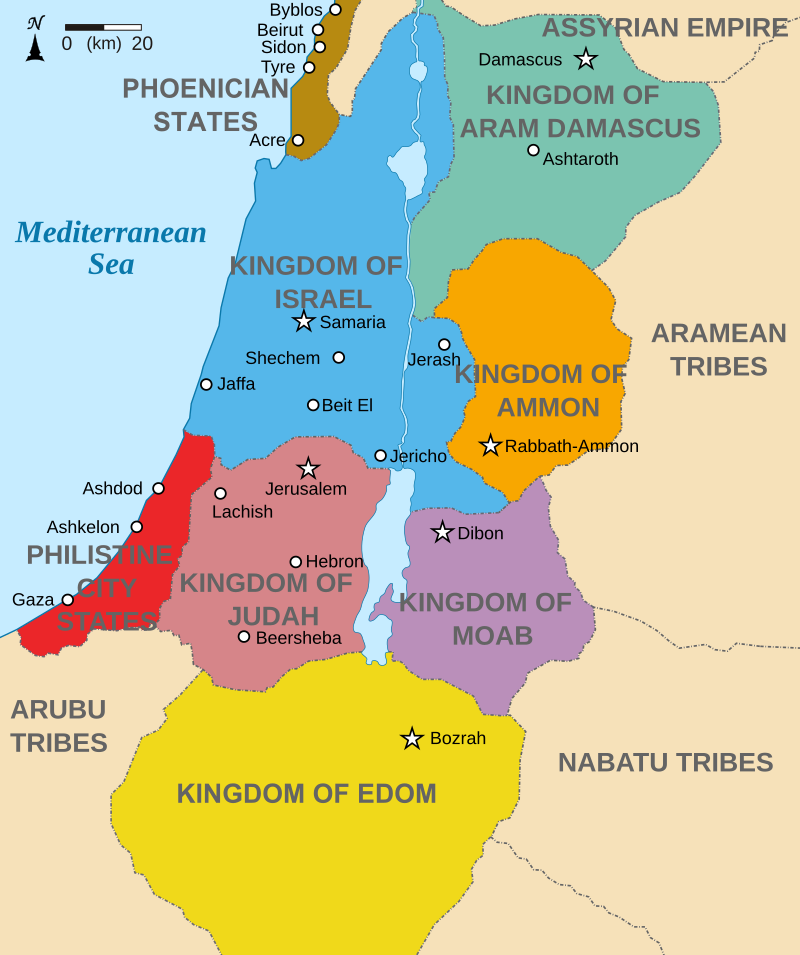
Isaiah returns back to the threat at hand, which is the Assyrians. It's another assurance that God will end the Assyrian advancement at His mountain, which refers to the surroundings of Jerusalem.
This prophecy was fulfilled in 701 BC when there Lord sent an angel to kill 185000 Assyrian soldiers as they camped outside Jerusalem, sieging the city. The king of Assyria retreated and had never become a yoke or a burden to Judah again. (14:25)
Everything that God has said he will do will come through. We have the confidence that God is in total control. "For the Lord of hosts has purposed, and who will annul it?" (14:27)
V. The oracle against Philistia (28-32)
Isaiah received the Oracle against Philistia in the year that King Ahaz died, which is around 715 BC. The Philistines were in power when the Joshua came into Canaan and after many battles, until they were subdued by King David.
It warned Philistia not to happy that the "rod that struck you is broken", possibly referring to the subjugation of Israel has been destroyed by Assyria. Ther reason is that the "serpent", possibly meaning Assyria, will send another King (Sennacherib) who will come down from the North and invade the whole Sinai Peninsula. (14:29)
The only place that is a refuge and where people will escape Assyria is Zion (Jerusalem), a city whose founder is God. (14:32)