Friday, October 11, 2019

Isaiah 53 - Suffering and Victory of the Servant

I. Born to Die (v1-v3)

Isaiah expressed the irony of the how the Messiah will come. He anticipated that many will not believe the Messiah, who will be the savior of mankind and yet has to suffer. The "strong arm" of the Lord was revealed through a poor, humble man, who was unable to overthrow the government, but was subjected to humiliation and death. (v1)

The Messiah grew up like a young plant, as weak as any other man. He did not come from a rich and powerful family, but out of a "dry ground", in the small town of Bethlehem and Nazareth, in a small province of the Roman empire. (v2)

But God can create miracles out of a dry ground. Do not underestimate the uneducated children in many 3rd world countries today. Their redemption is not insignificant - anyone of them can be a powerful lever in moving God's kingdom in ways that the most educated or supported saint cannot.

Physically, there was nothing particular about the Messiah, nor was there anything in His possession that would draw anyone to Him. (v2)  Not that He was ugly, but that He did not have the advantage that others may have. He was not a celebrity. Yet, God uses the weak to show His strength, and the foolish to show His wisdom. 

The Messiah would live a sorrowful life, not being understood by most of his friends and family members.  He owned no property and had no place to lay His head. He was sorrowful for the necessary separation from God - "My God, my God, why have you forsaken me?" 

He would be despised and rejected by men for teaching the truth. No man admired Him for His courage of correcting the pharisees. On the day of his death, no one was there to lend him support. How grieved and heartbroken was He, when His best friends all ran away, and even "hide their faces" (v3) and denied Him. 


II. Suffering for Us (v4-v9)

Yet His sorrows and griefs were largely for us and for our sakes. He had compassion over those who would be lost due to our own sins. We were like "sheep" that had gone astray.  It was in obedience to God did He allowed Himself to be arrested. And yet everyone at that time saw Him as being guilty and punished by God. "Crucify Him" they all shouted, and without protest, he let them lead him to the cross at Calvary.

God turned away His face from His Son as our iniquity was laid upon him. "He was pierced for our transgressions, he was crushed for our iniquities" (v5)

At no point did he try to defend himself or tried to escape. He knew His destiny was the cross, even from the beginning. After all the wondrous miracles they saw Him perform, His disciples expected some majestic acts from Jesus that will put the enemies to silence. But the only miracle He did was to re-attach the ear of the soldier whom Peter have cut off.  

Isaiah implied that He would not have any children, "who shall declare his generation?" (v8). Isaiah even predicted that though he would die with the wicked, he would be buried with a rich man.

It was God's will that Jesus was to suffer and to die, for his soul would become an offering to the guilty. Some may say it is not a big deal for one to die for someone you love - but that is true only because we have to die sooner or later, but Jesus did not have to die nor to be born a human. Furthermore, he died for His enemies - "forgive them Father, for they know not what they do."


II. The Victory of the Servant (v10-v12)

However, He will live again and see his "offspring" - those who believed and received His forgiveness. He will be satisfied seeing us being "accounted righteous" for the sacrifice He went through. It was not in vain, but in victory! (v11)

Even today, He still makes intercession for the transgressors, because He died for them. 


Tuesday, July 30, 2019

Introduction - Historical Overview Part 2 (Ch 40 - 66)

I. The End of Assyria

Manasseh

After 29 years of ruling, Hezekiah passed away at 54 years old in 687 BC. The throne went to Manasseh, whose name meant "forgotten". Most theologians believe that Manasseh was co-regent with Hezekiah for 10 years by working backwards from the date of the destruction of Solomon temple in 586 BC by Nebuchadnezzar.

Manasseh was only 7 when Hezekiah was fatally ill but God gave him 15 more years to live. Manasseh became co-regent at the age of 12 in 697 BC, and was 22 years old when he became the sole ruler. (2 Kings 21:1)

Manasseh turned out to be an evil king.  He rebuilt the high places and altars that his father had torn down, and worshiped the "hosts of heaven" (angels), and even sacrificed his sons to his gods. However, his ultimate sin was the persecution of God' servants. (2 Kings 21:16).

According to a Jewish Talmud, it was said that Isaiah was "sawed in two" (see Heb 11:37) when the soldiers caught the old man hiding inside a tree hollow. Isaiah died in 681 BC, the same year as Sennacherib.

God punished Manasseh by allowing him to be captured by the Assyrians. This likely happened around 647 BC, under the rule of Ashurbanipal, the son of Esarhaddon. Ashurbanipal reigned from 668 BC to 627 BC.

Manasseh was led by nose hooks and brought to Babylon like cattle. We were not told what was done to him, but any punishment under the Assyrians were bound to be extremely painful and humiliating.
Menasseh repented and humbled himself before God, and he was released back to Jerusalem. He began to remove all the idols that he had earlier put up. (2 Chron 33)  

Manasseh reigned for 55 years, the longest in the history of Judah.  His son, Amon, took over in 642 BC. Amon was an evil king who did not repent as Menasseh did. He was killed by his own officials after two years of rule.

Jeremiah

After Amon came Josiah, who was set on the throne at the age of 8 years old (640 BC). This is the time when Jeremiah was raised by God to preach to the nation regarding the coming of Babylon, during the 13th year of Josiah (about 627 BC).

"Then the LORD said to me, “Out of the north disaster shall be let loose upon all the inhabitants of the land. For behold, I am calling all the tribes of the kingdoms of the north, declares the LORD, and they shall come, and every one shall set his throne at the entrance of the gates of Jerusalem, against all its walls all around and against all the cities of Judah." (Jeremiah 1:14)

God was no longer talking about Assyria, but about Babylon and its allies. It was a time for the world order to change, for it was precisely the time when Assyria's invisibility was taken away.

In the same year Jeremiah started his ministry, Ashurbanipal died and there was an internal struggle and civil war for the Assyrian throne. The vassals of Assyria such as the Babylonians, Chaldeans, Medes, and Persians took the opportunity to attack Assyria and eventually burned down Nineveh in 612BC. Nineveh became unoccupied for centuries, fulfilling the prophecies of Nahum and Zephaniah:

"Behold, I am against you, declares the LORD of hosts, and will lift up your skirts over your face; and I will make nations look at your nakedness and kingdoms at your shame. I will throw filth at you and treat you with contempt and make you a spectacle. And all who look at you will shrink from you and say, “Wasted is Nineveh; who will grieve for her?” Where shall I seek comforters for you?"(Nahum 3:5-7; circa 650 BC)

"And he will stretch out his hand against the north and destroy Assyria, and he will make Nineveh a desolation, a dry waste like the desert." (Zephaniah 2:13; 640-630 BC)


II. The Rise of Babylon

Josiah

Josiah was considered a good king, and was probably raised by a few righteous advisers since his childhood.  Jeremiah was a key figure in his life. At 26 (622 BC), he began to repair the aging temple, and in the process, found the Book of the Law (which probably included the writings of Isaiah).  From the book, Josiah realized that God's wrath is on Judah and he initiated a spiritual reformation, including re-instating the Passover. (2 Kings 23)

However, it was too little, too late. The Lord's wrath on Judah was not turned away, because of the sins of Manasseh. The Lord said: "I will remove Judah also out of my sight, as I have removed Israel, and I will cast off this city that I have chosen, Jerusalem, and the house of which I said, My name shall be there.” (2 Kings 23:27)

Josiah's life ended with a major conflict with the Egyptians in 609 BC.  Pharoah Necho II  was leading his army to Carchemish (northern Syria) to join the weakened Neo-Assyrian empire against the aggressive Babylon advancement. To do so, the Egyptians must pass through Judah's territory. Josiah, for unknown reason, decided to confront Necho at the fields of Megiddo.  Josiah was killed in the battle.

After Josiah died, Jehoahaz his son took over the reign. He only ruled for 3 months, before Necho attacked Jerusalem and exiled him to Riblah. Necho put another of Josiah's son, Eliakim, on the throne and changed his name to Jehoiakim, who ruled for 11 years. Jehoiakim had to tax the people severely to pay very high tribute to the Pharoah.

Nebuchadnezzar 
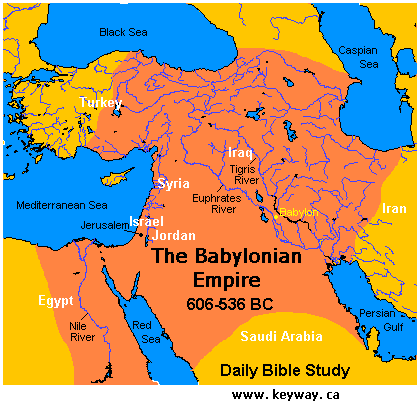
Related image
Babylonian Empire
Though delayed, Egypt and the neo-Assyrian armies eventually battled with Nebuchadnezzar at Carchemish in 605 BC. They lost horribly. The Assyrians faded from existence, and Egyptians retreated and was no longer a threat in the region. It was a deciding battle, and Babylon had no rivals for supremacy in that region.

Nebuchadnezzar attempted to invade Egypt in 601 BC, but was not successful. Probably because of this, Jehoiakim thought he could rely on Egypt, and started to rebel against the Babylon. (Jer 46:14-28). 

Jeconiah (also known as Jehoiachin) took over the throne in 598 BC, just before Nebuchadnezzar returned to quell the rebellious Judah. Jehoiachin surrendered in early 597 BC, and together with his royal family and 10,000 people, they were taken to Babylon. (2 Kings 24:15-16) This is the first Babylonian exile.

Nebuchadnezzar made Mattaniah, Jehoiachin's uncle, to be Judah's king and changed his name to Zedekiah. However, shortly thereafter, Zedekiah rebelled against Babylon as well, allying with Pharaoh Hophra, against the warnings of Jeremiah. 

Nebuchadnezzar returned again in 588 BC and besieged Jerusalem for almost two years, before making a breach into the city.  Zedekiah tried to escape but was captured in the country side. Zedekiah's children were executed in front of him, and he himself was blinded and taken to Babylon along with many others. Then Nebuchadnezzar burned down the Solomon temple and the palace, the pride of all the Jews. This will ensure no Jews will have any reasons to come back to the city. (2 Kings 25:8)

This is the second exile of the Jews, 586 BC. Judah became a Babylonian province, called Yehud, with Gedaliah put in charge as the governor. For all it seems, Judah no longer exists. 


III. The Fall of Babylon & Egypt

Cyrus the Great
Cyrus the Great - Liberator of Jews*
Persia was a small tributary state as a vassal to the Median Empire. Cyrus II rebelled against the Medes in 550 BC, and united the two empires into Medo-Persia. He was then called Cyrus the Great.

In 538 BC, Belshazzar was the co-regent with his father Nabonilus, in charge of Babylon. Cyrus's army attacked and took over the city. Belshazzar died during the battle, and "Darius the Mede" was put in charge. (Daniel 5:30,31).* 

While there are no mention of Darius in historical records, theologians believe that "Darius" is a title that meant "Holder of the Scepter", and the person's real name was Gubaru, one of Cyrus' general who took Babylon.

The Medo-Persia territory became the largest in the world, and it was known as the Achaemenid Empire, named after the first Persian King, Achaemenes.

The name of Cyrus was mentioned by Isaiah who prophesied that he will free the exiles, about 150 years before it happened. (Isaiah 45:1-3)  The Persians respected the culture of those they rule after, allowing them to retain their customs, languages and religions. Cyrus allowed the Jews to return to Jerusalem to rebuild the temple and the walls under the leadership of Zerubbabel and High Priest Joshua.

“Thus says Cyrus king of Persia: The LORD, the God of heaven, has given me all the kingdoms of the earth, and he has charged me to build him a house at Jerusalem, which is in Judah.”  (Ezra 1:2)

Because of the incredible prophetic accuracies, many critiques believed that Isaiah chapters 40-55 were written after the return of the Jews to Jerusalem. That got it the nickname "Deutoro-Isaiah" (Second Isaiah), and it was said that Isaiah's disciples wrote it after the exile.

However, accurate prophecies are not that difficult for God. In fact, Isaiah had already predicted the destruction of Babylon in the first half of the book, even before Babylon became a power. 

"Behold, I will stir up the Medes against them, who will not regard silver; and as for gold, they will not delight in it. Also their bows will dash the young men to pieces, and they will have no pity on the fruit of the womb; their eye will not spare children. And Babylon, the glory of the kingdoms, the beauty of the Chaldeans’ pride, will be as when God overthrew Sodom and Gomorrah. It will never be inhabited, nor will it be settled from generation to generation; nor will the Arabian pitch tents there, nor will the shepherds make their sheepfolds there” (Isaiah 13:17-20).

This is in line with Jeremiah's prophecy: "Make bright the arrows; gather the shields: the Lord hath raised up the spirit of the kings of the Medes: for his device is against Babylon, to destroy it; because it is the vengeance of the Lord, the vengeance of his temple” (Jeremiah 51:11)

Jeremiah also prophesied that the Jews will be exiled for 70 years.
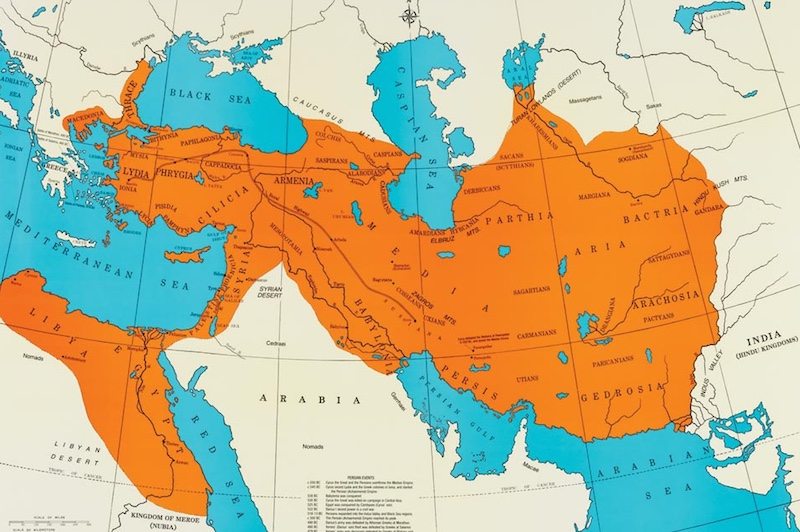
Image result for persian empire
Medo-Persian Empire
“For thus says the LORD: When seventy years are completed for Babylon, I will visit you, and I will fulfill to you my promise and bring you back to this place. For I know the plans I have for you, declares the LORD, plans for welfare and not for evil, to give you a future and a hope." (Jeremiah 29:10)

The 70 years can be calculated from the destruction of the temple by Nebuchadnezzar in 586 BC to  the dedication of the new temple in 516 BC. (Ezra 6)  God even took into account the 17 years of construction stoppage after the building of the foundations, due to social challenges and self complacency of the returnees.

God repeated many times that He is the only God, and besides Him there is no other. He was the one who created the universe and created them, and knows everything.  Furthermore, a reason these were written in advance of the exiles was to let the people know it was God who had planned it and who will rescue them at the right time. They should not credit the human instruments (the Persians) but to praise God for his compassion

"I am the first and I am the last; apart from me there is no God... Did I not proclaim this and foretell it long ago? You are my witnesses. Is there any God besides me? No, there is no other Rock; I know not one." (Isaiah 44:6-8)

So certainly, if there is a God, then it is not impossible that Isaiah wrote the second half of his book before he died.


IV. Theme of Isaiah 40-66

The second half of Isaiah was written as a comforting promise to the exiles in Babylon. It was a sudden switch between judgment and punishment in the first half, to a message of comfort, forgiveness for their sins, and ultimate victory for Israel.

It was as if a father is chastising his son for taking drugs, and warning him that he will be caught if he doesn't stop. But when the son was eventually jailed, the same father goes to the prison and talks to him gently, telling him things will be OK, that he will make things right again, and that his future will be bright.

Therefore, chapters 1-39 were about Condemnation and Punishment; Chapters 40-66 were about Comfort and Promises. 

If you were to read through the second half of the book in one reading, it will bring tears to your eyes, if you imagine yourself in a strange land, without the temple, without a king, and without God. God had done all He could to "be there" through Isaiah's writing, and His words are extremely loving and embracing.

Here are the key themes of Isaiah 40 to 66:

1. The Supremacy of God

His Power:  "See, the Sovereign Lord comes with power, and his arm rules for him... He gathers the lambs in his arms and carries them close to His heart;" (Isaiah 40:10-11)

His Wisdom: "For my thoughts are not your thoughts, neither are your ways my ways, declares the LORD. For as the heavens are higher than the earth, so are my ways higher than your ways and my thoughts than your thoughts." (55:8-9)

His Strength: "Behold, the nations are like a drop from a bucket, and are accounted as the dust on the scales ... All the nations are as nothing before him, they are accounted by him as less than nothing and emptiness." (Isa 40:15-17)

His Sovereignty: "for I am God, and there is no other; I am God, and there is none like me, declaring the end from the beginning and from ancient times things not yet done, saying, ‘My counsel shall stand, and I will accomplish all my purpose,’" (46:9-10)


2. Words of Comfort to the Exile

Do Not Fear: "For I am the Lord your God who takes hold of your right hand and says to you, Do not fear; I will help you. Do not be afraid, you worm Jacob, little Israel, do not fear, for I myself will help you,” declares the Lord, your Redeemer, the Holy One of Israel." (41:13-14)

Rejoice: As one whom his mother comforts, so I will comfort you; you shall be comforted in Jerusalem. You shall see, and your heart shall rejoice; your bones shall flourish like the grass; and the hand of the LORD shall be known to his servants, and he shall show his indignation against his enemies. (66:13-14)

Loved: "For the mountains may depart and the hills be removed, but my steadfast love shall not depart from you, and my covenant of peace shall not be removed,” says the LORD, who has compassion on you." (54:10)

Unforgotten: "But Zion said, “The LORD has forsaken me; my Lord has forgotten me.” Can a woman forget her nursing child, that she should have no compassion on the son of her womb?
Even these may forget, yet I will not forget you." (49:14-15)

Exile will end: "“In the time of my favor I will answer you, and in the day of salvation I will help you; I will keep you and will make you to be a covenant for the people, to restore the land and to reassign its desolate inheritances, to say to the captives, ‘Come out,’ and to those in darkness, ‘Be free!’ (49:8-9)


3. The Sin is forgiven

Healed: "For I will not contend forever, nor will I always be angry; for the spirit would grow faint before me, and the breath of life that I made. Because of the iniquity of his unjust gain I was angry,
I struck him; I hid my face and was angry, but he went on backsliding in the way of his own heart.
I have seen his ways, but I will heal him; I will lead him and restore comfort to him and his mourners, creating the fruit of the lips. Peace, peace, to the far and to the near,” says the LORD,
“and I will heal him."" (57:16-19)

Forgiven: “I, even I, am he who blots out your transgressions, for my own sake, and remembers your sins no more." (43:25)

Redeemed: "Remember these things, O Jacob, and Israel, for you are my servant; I formed you; you are my servant; O Israel, you will not be forgotten by me. I have blotted out your transgressions like a cloud and your sins like mist; return to me, for I have redeemed you." (44:21-22)

Shame Forgotten:  “Fear not, for you will not be ashamed; be not confounded, for you will not be disgraced; for you will forget the shame of your youth, and the reproach of your widowhood you will remember no more. For your Maker is your husband, the LORD of hosts is his name; and the Holy One of Israel is your Redeemer, the God of the whole earth he is called." (54:4-5)


4. Hope for Israel  

Saved: "But Israel is saved by the LORD with everlasting salvation; you shall not be put to shame or confounded to all eternity. " (45:17)

Returned: "And the ransomed of the LORD shall return and come to Zion with singing; everlasting joy shall be upon their heads; they shall obtain gladness and joy, and sorrow and sighing shall flee away." (51:11)

Reborn: "Who has heard such a thing? Who has seen such things? Shall a land be born in one day?
Shall a nation be brought forth in one moment?" (66:8)

Remembered: "Their offspring shall be known among the nations, and their descendants in the midst of the peoples; all who see them shall acknowledge them, that they are an offspring the LORD has blessed. (61:9)


5. The Messiah is Coming

Isaiah prophesied that the Messiah is coming, 700 years before Jesus was born.

His Calling: "I will keep you and will make you to be a covenant for the people and a light for the Gentiles, to open eyes that are blind, to free captives from prison and to release from the dungeon those who sit in darkness." (42:6-7)

His Rejection: "He was despised and rejected by men, a man of sorrows and acquainted with grief; and as one from whom men hide their faces he was despised, and we esteemed him not." (53:3)

His Beating: "I gave my back to those who strike, and my cheeks to those who pull out the beard;
I hid not my face from disgrace and spitting." (50:6)

His Suffering: "Surely he hath borne our griefs, and carried our sorrows: yet we did esteem him stricken, smitten of God, and afflicted. But he was wounded for our transgressions, he was bruised for our iniquities: the chastisement of our peace was upon him; and with his stripes we are healed."  (53:4-5)

His Silence: "He was oppressed, and he was afflicted, yet he opened not his mouth; like a lamb that is led to the slaughter, and like a sheep that before its shearers is silent, so he opened not his mouth. "(53:7)

His Death: "And they made his grave with the wicked and with a rich man in his death, although he had done no violence, and there was no deceit in his mouth." (53:9)

His Message: "The Spirit of the Lord GOD is upon me, because the LORD has anointed me
to bring good news to the poor; he has sent me to bind up the brokenhearted, to proclaim liberty to the captives, and the opening of the prison to those who are bound; to proclaim the year of the LORD’s favor, and the day of vengeance of our God; to comfort all who mourn;" (61:1-2)


6. The Gentiles are inclusive


Light to Gentiles: "“It is too small a thing for you to be my servant to restore the tribes of Jacob
and bring back those of Israel I have kept. I will also make you a light for the Gentiles, that my salvation may reach to the ends of the earth.” (49:6)

World Evangelism:  "And from them I will send survivors to the nations, to Tarshish, Pul, and Lud, who draw the bow, to Tubal and Javan, to the coastlands far away, that have not heard my fame or seen my glory. And they shall declare my glory among the nations. And they shall bring all your brothers from all the nations as an offering to the LORD" (66:19-20)


7. The End of Days

Vengence against Nations: "For the day of vengeance was in my heart, and my year of redemption had come. I looked, but there was no one to help; I was appalled, but there was no one to uphold;
so my own arm brought me salvation, and my wrath upheld me. I trampled down the peoples in my anger; I made them drunk in my wrath, and I poured out their lifeblood on the earth.” (63:4-6)

Longevity: "No more shall there be in it an infant who lives but a few days, or an old man who does not fill out his days, for the young man shall die a hundred years old, and the sinner a hundred years old shall be accursed. (65:20)

New Heavens and New Earth: “For behold, I create new heavens and a new earth, and the former things shall not be remembered or come into mind. (65:17)


IV. Framework by Chapters

Chronologically, the chapters can be divided into these sections:

Chapters 40‑48: Redemption Promised. It is a collection of prophecies of comfort emphasizing an imminent redemption; these oracles arc addressed to the Babylonian exiles (called Jacob or Israel) and highlight the power of God as the creator of the universe and the fulfiller of prophecies.

Chapters 40‑55: Redemption Provided.  It describes how Israel’s will be restoration through the Servant. This is a group of prophecies directed toward Zion (called a bride or woman); these materials emphasize her reconciliation with God and physical restoration. There are many direct prophecies about the Messiah which were fulfilled in Jesus Christ. 

Chapters 58‑66: Redemption Realized. God brings about His everlasting deliverance and everlasting Judgment. This is a diverse group of prophecies of social and religious rebuke and of hope; these are apparently directed to the Judean community restored to its homeland.  We also see God opening up His kingdom with the gentiles.


Footnotes
1. https://study.com/academy/lesson/kings-of-the-persian-empire-cyrus-cambyses-ii-darius-i.html


Isaiah 41 - Fear Not For I Am With You

I. The Coastlands Should Fear God (1-7)

God challenges the coastlands to come before him to justify their paganism and idolatry. The coastlands refers to far-away nations.

There is one raised up by God in the east, whom nations are given to, and who rule over kings. (v2-4) Theologians argue whether it would be Abraham or Cyrus.  Cyrus seem to be more potential here due to the context of Isaiah's political prophecies.  In either case, God was the one who controlled the raising and downfalls of all leaders.

"Who has performed and done it, Calling the generations from the beginning? I, the LORD, am the first; and with the last I am He." (v4)

God has a plan for the whole of history and for the future. He planned how it started, and He has a plan on how it will end. Jesus was given the same title in Revelation 22:13: "I am the Alpha and the Omega, the first and the last, the beginning and the end.”  


The coastlands saw the power of God and were afraid. Instead of accepting the truth and surrendering to the creator, they encourage themselves to go on building more idols. (v7)


II. Israel Does Not Have To Fear (8-20)

Israel, however, was different. It was chosen by God, the descendants of Abraham and Jacob. They were called God's servant, that God will never cast away. The word servant is a position of privilege, given to such as Moses and David. It confirmed the identity of the Jews. 

However, Jesus called the believers something even more intimate: "You are My friends if you do whatever I command you. No longer do I call you servants, for a servant does not know what his master is doing; but I have called you friends, for all things that I heard from My Father I have made known to you." (John 15:14-15)

God told Israel not to fear, because He is with them. He will strengthen them and help them, and uphold them in His righteous right hand. (v10) The nations who are incensed against Israel will be disgraced. Their threats will be as nothing, and they will soon perish, just as the Assyrians, Babylonians, Persians, Greece and even the Romans (v12)

They are not to fear, for God is their redeemer who transform them from a worm with no teeth to a nation with sharp teeth and be like a threshing sledge that can thresh down mountains. (A threshing sledge is an instruments made to remove the chaff from the grain.) 

God will hear those who is in need of water but can't find it. He will open up rivers in the remote heights and fountains in the valleys. Even the dessert and wilderness will spring water, and cedar, acacia trees, the myrtle, the cypress and pine will grow there.  God will refresh them. 

The people will see this and will remember that God was there to do this for them. (17-20)


III. God Challenges the Idols (22-29)

There are many religions and idol worshippers even today. God is saying, "present your case and explain the reason for your belief."  They are to show that they can do something or tell the future, to prove they are "gods". 

Paul said: "Therefore concerning the eating of things offered to idols, we know that an idol is nothing in the world, and that there is no other God but one." (1 Cor 8:4)

God will raise a leader from the North who will fight against the "princes", meaning Babylonians. This leader was probably Cyrus, who had high respect of the Lord. Only God could have declared this from the "beginning" to prove his power and righteousness.  No idols could have done this. 


IV.  Summary

This chapter has many "I wills": 


· I will strengthen you. (Isaiah 41:10)

· I will help you. (Isaiah 41:10, 13, and 14)

· I will uphold you with My righteous right hand. (Isaiah 41:10)

· I will make you into a new threshing sledge with sharp teeth. (Isaiah 41:15)

· I will open rivers in desolate heights. (Isaiah 41:18)

· I will make the wilderness a pool of water. (Isaiah 41:18)

· I will plant in the wilderness the cedar and the acacia tree. (Isaiah 41:19)

· I will set in the desert the cypress tree. (Isaiah 41:19)

· I will give to Jerusalem one who brings good tidings. (Isaiah 41:27)


These are generous messages directed to His people.


Monday, July 29, 2019

Isaiah 40 - Comfort For The Exiles

I. Comfort for the Oppressed

"Comfort, comfort my people" were the starting words. It was a very different intent and tone from the first 39 chapters. Chapters 1-39 were about predominantly Condemnation and Punishment; Chapters 40-66 were about Comfort and Promises. 

"Speak tenderly to Jerusalem" literally means speaking to the heart. It was not just a passing or surface statement, but a message God wants the people to know and to feel. (v2)  

Two main points God wants them to know: (a) Warfare is ended (b) Iniquity is pardoned.  In our lives, many "warfares" are because of consequences of our own disobedience. God is never pleased when we are being punished, and He is always there to comfort us that the pain or difficulties will be over soon.  In addition, He reminds us our iniquity has been pardoned, and this was made a reality after Christ died for us. 

The phrase "to receive from the Lord's hand double for all their sins" (v2), does not mean they were punished twice for their sins, but "double" means "to fold over, fold in half" which means that the sin and the payment had been equal.

In hind sight, we realise that our punishments are not corresponding to our sins, else we would not only suffer in life but also separated from God after life. Rather, Jesus was the one who had taken the punishment to make it "equal" to what we would have to bear. 

"Make straight in the desert a highway for our God" (v3) is symbolic of making a way for God to come. Yet There are mountains and crooked paths that need to straightened out. Rough places needed to be smoothen out. Then the glory of God will be revealed. This is not just applicable at a national level, but most importantly, at a personal level. Our hearts first need to settled down, accept that the warfare is over, that we have been forgiven, and we now need to change our attitudes, our behavior to allow God's glory to outshine our own ambitions, so that "all flesh shall see it". 

Luke 3:4 attribute this prophecy to what John the baptist was doing to prepare the "hearts" of the people to received Jesus. What was the real message to the "hearts" of the people? In verse 6-8, it speaks about the frailty and brevity of life. We all will fade away, but the word of God stands forever. (v8)  God's word has been around since the time of Moses, and has never been proved wrong. If this is the case, it speaks about the urgency and humility for individuals to invite God into our hearts. 

“All flesh is as grass, and all the glory of man as the flower of the grass. The grass withers, and its flower falls away, but the word of the LORD endures forever.” Now this is the word which by the gospel was preached to you." (1 Peter 1:23-25)

II. Preparing for His Coming (9-11)

"Behold your God!" (v9) invites us to gaze on the majesty of God. But when you gaze at God, what comes to mind other than His majesty? Perhaps different people will see a different aspect of God because of their personal experience. These may be love, power, confidence, tenderness, comfort, provider, help, and so on. 

When God comes, he will come with power and brings reward to his people. He will provide for his people and He will carry the weak (the lambs) and young in His arms. (v11) Jesus was the good, the great and the Chief Shepherd:

"I am the good shepherd. The good shepherd lays down his life for the sheep." (John 10:11)

"Now may the God of peace who brought again from the dead our Lord Jesus, the great shepherd of the sheep.. " (Heb 13:20)

"And when the chief Shepherd appears, you will receive the unfading crown of glory." (1 Pet 5:4)


III. God's Supremacy (12-17)

Global and Space - God reminded the people of his greatness, where the creation is small compared to Himself. His "hands" can hold all the waters and can measure the heaven. All the mountains on earth can be measured on a scale.  (v12)

Science and Moral Knowledge - God is not just omnipotence but also omniscient. He has all the knowledge and understanding, but also the moral knowledge such as justice. (v14)

Nations and Politics - The nations are a "drop in the bucket" compared to God's power. Even if the entire forest of Lebanon was used to burn all the sacrificial animals, they would not be sufficient to satisfy God. Nations are nothing and worthless to God. What is important to God are the souls of men.


IV. God the Creator (18-26)

Objects of Worship - verses 18-20 is a mockery of idols, where the workman has to choose durable wood and carve something that will not fall over. Today, we have other idols, from materialism to pleasures. 

God, on the other hand, was the "original" creator. He sits above the Earth, and all the inhabitants are like grasshoppers. 

He is the one who controls who becomes princes or judges, when they rise and when they fall. 

God wants us to "lift up our eyes on high", to look and understand the number and the nature of the stars, and ponder God's majesty and power and ask the question "To whom then will you liken Me, or to whom shall I be equal?"   (v25)

V. God our Caretaker (27-31)

Our lives are not hidden from God, even when we thought so. (v27) God neither faints nor is weary, and his understanding is "unsearchable", he knows everything. God knows our needs. 

God is the one who strengthen us when we need it. We wait on the Lord and when time is right, he gives us strength to soar above our problems.  "But those who wait on the LORD Shall renew their strength; They shall mount up with wings like eagles, They shall run and not be weary, They shall walk and not faint." (40:31)


Friday, July 19, 2019

Isaiah 39: Warnings about Babylon

The prince of Babylon, Merodach, son of Baladan, sent envoys with presents to Hezekiah, after he recovered. This was likely after the Assyrian siege had passed. 

Merodach was a freedom fighter for Babylon, which was, like Judah, under the oppression of the Assyrians. The Babylonians came to Jerusalem probably to understand why it was not toppled by the Assyrians. 

Hezekiah, after God has saved him, became proud and foolhardy.  He showed them his treasure house, the armory, and all his warehouses. "There was nothing in his house or in all his realm that Hezekiah did not show them" (v2) 

Hezekiah neither asked God or Isaiah before showing them everything, and neither did he mentioned how God had saved them. He wanted the impression that his own weapons had won the battle. 

When Isaiah found out what had happened, he delivered a message from God, that everything stored in his house will be taken away to Babylon, and his sons will be exiled and become eunuchs in the palace of the king of Babylon. 

Hezekiah gave an arrogant and sarcastic reply, saying that the news is good, since the disaster will only happen to his descendants, and not to himself. 

Hezekiah drifted away from God in the last days of the life, which God have him. He enjoyed the blessings but did not appreciate Lord who gave him the blessings. It is likely that because of his complacency, his son, Manasseh, rebelled against God. 

This chapter ends the first part of Isaiah's writings, where the focus was on the judgement of God on Israel and on Judah using the Assyrians. It prophetically declare that the next power God will use are the Babylonians, who will take the kings and the people and exile them. This happened 100 years from the prophecy and their stories are told by Jeremiah. 


Isaiah 38 - Hezekiah's Sickness and Recovery

I. God lengthen Hezekiah's Life (1-8)

Hezekiah became extremely sick, and Isaiah told him he would die, signifying that there was no cure. Hezekiah turned his face to the wall and cried - it was a private prayer to God. He recited his loyalty to God and the good things he had done.

While this type of prayer is common in the Old Testament, where God blessed and cursed people based on their righteousness, Christians do not need to do so, as we claim only the righteousness of Jesus Christ.

God answered Hezekiah and promised him another 15 years to his life. (v5)   If Hezekiah died in 687 BC, then this sickness occurred around 702 BC, which is right in the midst of the Assyrian siege. Was this a punishment for his bribe to Assyrian King? Or was it to draw him closer to God and to depend on Him?

God had a purpose for healing him, not just for Hezekiah's sake. In 2 Kings 20, God said: "and I will add fifteen years to your life. I will deliver you and this city out of the hand of the king of Assyria, and I will defend this city for my own sake and for my servant David’s sake.”  For if Hezekiah died, then the city would be without an experienced king, leaving a 7 year old Manasseh in charge. (This assumes Manasseh was 12 years old when he co-regent with his father in 697 BC). 

God did more than just giving His word (which should have been enough), but God proved it by showing a miracle, where the sun's shadow moved backwards by 10 degrees on the sundial (about 5 to 6 hours).

The other place where God changed the gravitational laws was in Joshua 10:13, where the sun appeared to have stood still for one day. For Hezekiah, the earth seemed to have reversed its spin, which can't be explain scientifically.


II. Hezekiah's Lament (9-16)

Hezekiah journal his experience of near-death. He said he was heading towards Sheol, the place the dead went in the old testament days. Hezekiah was technically correct to be concerned that he would not see Yahweh, because God is in heaven and not in Sheol, for the saints have not had their sins removed by Christ. (v11) 

However, the death of Jesus Christ forgave and removed all sins, even those who had faith in God in the old testament. We believe that when Christ died and went into Sheol for 2 nights, the old testament saints were taken into heaven. Believers who died thereafter go straight into heaven to be present with God.  (2 Cor 5:6-9)

Therefore, in the old testament, death was something to fear and where they end up with was uncertain. But the work of Christ had taken away the "sting of death" (1 Cor 15:53-55), and as Paul said, "to die is gain" (Phil 1:21)

Hezekiah suffered day and night, yet he never gave up praying by constantly "looking upwards".  "I calmed myself until morning; like a lion he breaks all my bones; from day to night you bring me to an end. .. My eyes are weary with looking upward. O Lord, I am oppressed; be my pledge of safety! (v13,14b)  

Hezekiah did not curse or have any hatred towards  anyone or towards God.  He said: "What shall I say? For he has spoken to me, and he himself has done it." (v15)

III. Hezekiah's Praises (17-20)

At some point, Hezekiah realised that the suffering was for his benefit. It could be that this experience solidify his trust in God. Because of this, he relied on God for the salvation of Jerusalem. (v17) 

"Behold, it was for my welfare that I had great bitterness; but in love you have delivered my life from the pit of destruction, for you have cast all my sins behind your back." (v17)

Hezekiah was fulled of gratitude for God's gift of life. In his poem, he expressed thanksgiving, praises, and worship with music at the house of the Lord. He would make God's faithfulness known to his children. 


IV. The Cure

Hezekiah was eager to go to the house of the Lord, but he needed to be healed first. Isaiah prescribed the application of cake of figs to the boil, so that he will recover.  While this may not be a medically right way to medicate whatever he has, God often use symbolic gestures to restore people, such as Naaman bathing in the river to heal his leprosy, and Jesus using mud to treat the blind. 


Tuesday, July 16, 2019

Isaiah 37 - The Lord’s deliverance of Jerusalem

I.  Hezekiah’s reaction to words of Rabshakeh. (1-5)

Hezekiah's first reaction when his people told him what Rabshakeh, was to humble himself and wear a sackcloth.A sackcloth is worn during the funerals. It was a mourning cloth. Hezekiah took on the accountability of the deaths of his people in all the cities that had fallen to Assyria.

Hezekiah went to the house of God to pray to God, while sending his officials to Isaiah. He told the officers to ask isaiah to pray for the people: "Therefore lift up your prayer for the remnant that is left." (v4)

This is was opposite of what King Ahaz did in the same crisis (isaiah 7:14), who refused to go to God.


II.  Isaiah’s words of assurance to King Hezekiah. (6-7)

Isaiah responded to the officers, that God has heard the blasphemous words of Rabshakeh. God has taken the words personally, and will protect Jerusalem. The Assyrians will be distracted by "rumours", and will postpone their attack on Jerusalem. 

Many times we hear the "words" of our enemies and Satan, to make us afraid. But they mean nothing if God is on our side.


III. Rabshakeh’s letter to Hezekiah (8-13)

As prophesied by Isaiah, Rabshakeh heard that the King of Assyria had left Lachish and gone to Libnah to quell another uprising.

At the same time, Egypt is also marching up, led by the Ethiopian prince, Tirhakah. This probably brought some false comfort to the smaller nations in Palestine, though Isaiah had prophesied that Egypt cannot protect Judah against Assyria.

Rabshakeh knew that Judah may think that the threat is over, so he sent a letter to Hezekiah to maintain the momentum of fear.  "Do not let your God in whom you trust deceive you by promising that Jerusalem will not be given into the hand of the king of Assyria." (v10)   No other gods have saved their own nations, how could God save Jerusalem or it's king?


IV.  Hezekiah’s prayer.  (14-20)

Hezekiah went to the house of the Lord again, and spread the letter out before God, and prayed. His first words was to glorify God: "O LORD of hosts, God of Israel, enthroned above the cherubim, you are the God, you alone, of all the kingdoms of the earth; you have made heaven and earth." (v16)  This is a prayer of faith, that God, who had created the universe, nothing is impossible for Him to do. 

In contrast, Hezekiah said all the gods that the Assyrians have cast into the fire are not gods but creation of human hands. He called on God to save them so that everyone will know that God is the true God. 


V. God's Answer to Hezekiah (21-35)

God heard Hezekiah's prayer and answered with a plan to destroy the Assyrian King. God said that everything the Assyrians said against Jerusalem was said against God. “‘Whom have you mocked and reviled? Against whom have you raised your voice and lifted your eyes to the heights? Against the Holy One of Israel!" (v23)

In fact, whatever the Assyrians were doing - the destruction of the cities - were in God's plans from long ago. They have no rights to boast about it at all.  “‘Have you not heard that I determined it long ago? I planned from days of old what now I bring to pass" (v26)

The Lord is aware of everything that goes on within the Assyria, and because of their rage against God, they will be turned back to where they come from with a "hook in their nose", the same thing they were doing to their enemies.  (v28-29)

God promised that the people will continue to have food to eat over the next 3 years, as that is the biggest worry when the enemies put up a siege. The Assyrian army will never get a chance to shoot an arrow inside of Jerusalem, nor cast up a siege mound on its walls. "For I will defend this city to save it, for my own sake and for the sake of my servant David.” (v35)

We must realise that those who criticise or mocked Christians are actually mocking God. God will hold them accountable, and will protect us according to His will. 


VI. God strikes the Assyrians (36-38)

However, Hezekiah did not just stand idle even though Isaiah promised salvation from the Lord. The King did what a king must do - to defend the city in the event of a siege. He strengthened the walls, and food and weapons were brought into the city. And the most important thing is water to ensure they can withstand a very long siege. 

2 Chronicles 32 described how the Gihon Springs were tunneled into the city's Siloam Pool. It was a marvel of engineering in those days, as 1750 feet of rock was carved out for the tunnel. As the tunnel is hidden under water, the Assyrians would not know it exists.  That's why Rabshakeh said wrongly to the officers that the Jewish soldiers will "..eat their own dung and drink their own urine" (Isaiah 36:12)

The Assyrian army finally arrived in force around 701 BC. They have already destroyed the walls of Lachish and had conquered that city. Sennacherib did not personally come, perhaps leading a separate campaign. Hezekiah knew that sooner or later, they will be able to breach Jerusalem's wall as well.

We don't know the details of what happened, but the Bible simply said: "And the angel of the LORD went out and struck down 185,000 in the camp of the Assyrians. And when people arose early in the morning, behold, these were all dead bodies." (v36)  Some historians said it was possible that the Assyrian army caught a deadly disease, such as bubonic plague from the mice, or cholera. Regardless, there was no doubt that God brought it upon the Assyrians, and protected the people in Jerusalem. 

In the annals of Sennacherib, he mentioned he took forty-six fortresses and towns in Judah, and captured over 200,000 people. But he never mentioned the taking of Jerusalem. He also never mentioned his dead soldiers. 

Sennacherib took his army away from Judah and continued to fight other wars until 690 BC. He was killed by his two of his sons in his palace at Nineveh in 681 BC, as prophesied by Isaiah in verse 7. This was the same year that Isaiah died, and Hezekiah never knew this as he died in 687 BC. Sennacherib was replaced by a third son, Esarhaddon, who continued to make threats against Hezekiah's next heir, Manasseh.  (See the history in Historical Overview Part 2)


Sunday, June 30, 2019

Isaiah 36 - Assyria Cast Doubt and Discredit Judah's Hope

I. Rasbshakeh's Cast Doubt on Judah's Hope  (1-10)

Hezekiah's last minute tribute of gold and silver (worth $41 million in today's money) to Sennacherib while he was attacking Lachish (72 km from Jerusalem) did not work.  (2 Kings 18:14).  At this time, the Assyrians had already conquered all the fortified cities in Syria and north of Jerusalem. 

Sennacherib took the treasures but sent "Rabshakeh" - a title of the field commander - to Jerusalem with a large number of troops.  Rabshakeh made bold and defiant speech against Judah,  systematically designed to create fear and hopelessness to all who hear. 

Rabshakeh made the following rationale against Judah:

1. You can't trust your friends (v6)

Rabshakeh criticised Judah's ally Egypt. Egypt did not come to Judah's aid as Assyria attack, and had been beaten by Assyria in previous encounters.  Egypt is like a staff made of broken reed that will only pierce those who lean on it. (v6)

Rabshakeh was right about Egypt, as Isaiah had warned Hezekiah before. However, Isaiah's purpose was to turn Judah's trust towards the Lord, while Rabshakeh's purpose was to humiliate them.

2. You can't trust your God (v7) 

Rabshakeh tried to twist what Hezekiah did to the high places as something that had displeased God. Hezekiah tore down the high places, including Moses' staff, because the people we worshipping idols. God was not displeased.  However, the Assyrians did not understand this, and perhaps many of the citizens were also not happy about what Hezekiah did. Rabshakeh tried to take advantage of this confusion.

3. You can't trust your army (v8)

Rabshakeh sarcastically insulted the army of Judah, saying Assyria can give them 2000 horses, but they do not even have enough soldiers to ride them. Judah had depended on Egypt's might and skills and do not have any trained warriors to take on the weakest Assyrian captain.  We recall that David had "great men" who helped him in warfare, but there were none like them now. 

4. God had sent me against you (v10)

Rabshakeh now lied through his teeth, by saying that God is the one who sent them to destroy the land. He tried to turn God against Judah. 

These are words that brings doubt to the Judean people.  This is what Satan does to us when we are under pressure and difficulties. He creates messages that make us doubt if anyone can help us - not our friends, not our God, not even ourselves. In fact, he confuses us to make us think that God is against us and the bad things come from God!

While God were using the Assyrians to punish Judah (and later on the Babylonians), His plan was to bring salvation to them and to all nations through the sacrificed of His own Son, Jesus Christ. History showed that Israel outlived all the mighty nations until today. 


II. Rabshakeh Discredit Hezekiah and God  (11-20)

Rabshakeh was speaking in Hebrew, and not in Aramaic which was the diplomatic language of the region at that time. Hezekiah's officials asked him to speak in Aramaic instead, but he refused. His purpose was to deliberately make sure that the "men sitting at the wall", meaning the soldiers, can hear the demoralising words he spoke. 

"Doomed to eat their own dung and drink their own urine" (v12) refers to the outcome of the siege that the Assyrian lays on Jerusalem.  This is to further terrify the soldiers who hear his words. 

Rabshakeh then humiliates Hezekiah in front of all his people. He called the king of Assyria "the great king", but did not even use the title of "king" before the name Hezekiah.  He said Hezekiah were deceiving them and they shouldn't be listening to him. (v 14-16)

They should not believe Hezekiah to trust God, for up to now, no other gods have been able to protect them from the Assyrians, including Samaria, the relatives of Judah. The conclusion was neither will God deliver Judah from them. (v18-20)

Instead, they should listen to the Assyrian king, who will reward them with their own property, a place with grain and wine, bread and vineyards. (v16)

e) The report to Hezekiah (21-22)

Eliakim, Shebna and Joah did not answer Rabshakeh, as Hezekiah had wisely told them not to do so.  Rabshakeh said things that had lies and truth mixed together to create doubt, to disorient and to discredit them. While his analysis on the physical inferiority was accurate, his analysis on God was a total lie.  There was not point in answering such a man.  Instead, they went back and reported what was said to Hezekiah, with their clothes torn in despair.

In the same way, we should not be challenging the voices of doubt, disorientation and discredit that Satan brings to our mind. We cannot fight Satan's words, other than with God's word.  Furthermore, if we react to what he says, it will bring us more conflict with our family, friends or co-workers and make things worse.  We are to shut up these voices with the name of Jesus, and trust what God had said to us instead, even when inside we do not have a solution to our problem.


Friday, June 21, 2019

Isaiah 35 - The Restoration of God's People

I.  Restoration of the Land and the People (v1-4)

In contrast to Chapter 34, the land of Israel will be restored. Its desert shall blossom like the crocus, a small, purple flower that is the first to emerge from the spring.  It represents cheerfulness and glee as it brings color to the landscape after a long winter.  It is also associated with youth. *

The glory of Lebanon will be given to Israel, possibly symbolizing the restoration of the forests and precious trees such as the juniper, the fir and the cypress which are used to build the temple.  Carmel and Sharon may symbolises the fertile pastures that feeds the farm animals. (Isa 60:13; 65:10).  

The blessing is more than just ecological but a spiritual flourishing in our lives. We will see clearly the glory and splendour of God. 

Hebrews 12:12 quotes Isaiah 35:3  - "Strengthen the weak hands, and make firm the feeble knees."  It is an encouragement to believers to strive for peace and holiness, and to avoid bitterness so that as many as possible will enjoy God's grace. 

Those with "anxious hearts" (v4) - those that want to take actions in haste, can instead be fearless for the vengeance of God will come soon. ("will come" appears three times in this paragraph.) 

This doesn't mean we will see the vengeance in our life time, but we know for certain that there will be a day of reckoning. 

II. Salvation of the Lord (5-7)

"The eyes of the blind shall be opened, and the ears of the deaf unstopped" (v5) is a prophecy of the salvation of God though His son, Jesus Christ. The miracles are a sign of the presence of God.  John the baptist asked whether Jesus is the Messiah, and Jesus answered "the blind see and the lame walk; the lepers are cleansed and the deaf hear" (Mat 11:4-5) as the visible proof of who He was. 

Isaiah further said that "waters break forth in the wilderness and streams in the desert" (v6). While this may refer to the physical healing of the land, which Israel is already enjoying, it is also a spiritual prophecy about the effects of salvation that Jesus brought. "He who believes in Me, as the Scripture has said, out of his heart will flow rivers of living water." (John 7:38).  

Before we believed, we did not know how parched we were, and we were looking to quench our thirst from "empty cisterns." It was only after we were born again that we realised the true refreshments that Christ brings to every part of our lives. 

III. Way of Holiness (8-10)

Jesus came and established a new way for the Jewish people. In fact, followers of Christ were literally called the followers of "The Way."  Jesus said: “I am the way and the truth and the life. No one comes to the Father except through me. If you really know me, you will know my Father as well. From now on, you do know him and have seen him” (Jn 14:6-7).

Isaiah said that the Way of Holiness is like a highway (v8). Thr highway is the path to God. The unclean  and the lions (people who wants to do evil or harm) will not walk there. 

Rather, the redeemed shall walk in it - it is not that if you walk, you will be redeemed, but that you are redeemed before you are allowed to walk in it.  Even "fools... shall not go astray" - it is opened to everyone, whether the learned or the illiterate. 

"The ransomed of the Lord shall return and come to Zion with singing"  (v10) not only refers to the Jewish people, but to all who were "redeemed" by Christ. 

The "returning"  seem to suggest that even the dead in Christ, and the righteous dead before Christ, will be part of the multitude streaming towards Jerusalem to give praise to the one on the throne. And there will be an everlasting joy and gladness over the people, for there will never be any sorrow and sighing evermore.


*www.flowermeaning.com

Isaiah 34 - Indignation of the LORD

I. Judgment on the nations (v1-7)

The prophecy speaks about "all nations" of the earth. "For the indignation of the LORD is against all nations, And His fury against all their armies;" (v1).  The fulfillment of this prophecy will be at the end times, when God's wrath are filled to the rim and judgment is to be poured out on corrupt nations.

In Matthew 24:21, Jesus spoke about the great tribulation.  Revelation speaks about the fulfillment of that prophecy, where natural disasters and wars will kill one third of the earth.

The mountains are described to be full of corpse and blood. "And His fury against all their armies; He has utterly destroyed them". (v2)  

"All the host of heaven shall rot away, and the skies roll up like a scroll." (v4). The tribulation will be supernatural and affects nature. 

Revelation 6:12-14 has a parallel description: "When he opened the sixth seal, I looked, and behold, there was a great earthquake, and the sun became black as sackcloth, the full moon became like blood, and the stars of the sky fell to the earth as the fig tree sheds its winter fruit when shaken by a gale. The sky vanished like a scroll that is being rolled up, and every mountain and island was removed from its place."

God used Edom as a representative of all nations that hated the Jews. His "sword", symbolising punishment, will come down on all such nations. It will be filled with blood. The culmination of deaths will be fulfilled at the battle of Armageddon: "And the winepress was trodden outside the city, and blood flowed from the winepress, as high as a horse’s bridle, for 1,600 stadia" (Rev 14:20)


II. God's Day of Vengeance

Evil and injustice may rule today, but God has a "day of vengeance" (v8). The lands of the nations will burn for nights and days. The land will be lie waste, such that no one shall pass through them except for the animals. (v11) 

No one will rule those kingdoms. (v12).  Their buildings will be run down with forests and thistles, and dwelled only by wild animals, birds and owls.

Isaiah said that this is something that this scenario is something God had planned, and we are to search His Word to see it is fulfilled. It may be that Edom will be one of such land after the Armageddon (v16-17). 

We can imagine that if one-third of earth's population are dead, and perhaps another billion of Christians have been raptured, many of earth's cities will be empty. Most people will move out to the big cities, and thus leave their towns uninhabited. Animals will come out of the jungle and live in the deserted cities.

Death and destruction are consequences of rejecting God. 

Saturday, June 15, 2019

Isaiah 27 - The Restoration of Israel

I. The new vineyard (1-6)


In the last days, the Lord will punish "Leviathan the fleeing serpent", a symbolic name for Satan, and will "slay the dragon in the sea" (v1). The "dragon in the sea" refers to the anti-christ, as described in Revelation 13:1 - "And I saw a beast rising out of the sea, with ten horns and seven heads, with ten diadems on its horns and blasphemous names on its heads."


God will be the keeper of the "pleasant vineyard", which often refers to Israel. God will protect it and march against those that comes against it.


In days to come, "Israel shall ... fill the whole world with fruit" (v6) - this is already fulfilled: tropical and citrus fruits are the 3rd largest export of Israel today, after diamonds and petroleum.


II.  Expiation and desolation (7-11)


The Lord has not punished Judah as severely as He will strike the enemies. Jacob's guilt will be "atoned for" and the stones of the idols will be crushed into pieces.


The "fortified city", the cities of men, will be deserted. They will be like the wilderness, and can only be used to make fire. Thee people have no discernment and God, their maker, will not have compassion on them. (v11)


III. The Ingathering of Israel (12-13)


In the last days, the Lord will glean Israel's people one by one. A great trumpet will sound, and those who were exiled into Assyria and those who escaped to Egypt, (ie. the northern 10 tribes) will return to Jerusalem to worship God. 

Isaiah 26 - Glory to God for His righteous deeds


I. Praise for the strong city (v1-6)


"In that day" refers to the last days, where there will be a song sung in Judah. The song praises God for making the city strong. The city will be opened up for the righteous to come in - this city is the kingdom of God, opened to those who trust in Christ.

Isaiah calls out for people to trust God, for they have nothing to worry about: "You keep him in perfect peace whose mind is stayed on you, because he trusts in you. Trust in the LORD forever, for the LORD GOD is an everlasting rock." (v3-4)  "Perfect Peace" in Hebrew is "shalom shalom." To gain such peace, we must "stay" on God, as an anchor for our minds.

Paul said the same: "do not be anxious about anything, but in everything by prayer and supplication with thanksgiving let your requests be made known to God. And the peace of God, which surpasses all understanding, will guard your hearts and your minds in Christ Jesus." (Phil 4:6-7)

God will humble the inhabitants of all lofty cities and the poor and needy (those unjustly oppressed) will trample them.

b) The effects of Jehovah’s judgments (v7-10)

The path of the righteous is level, and God will make the way level. (v7) This is a paradoxical statement - I believe the righteous's character looks to walk uprightly and avoid temptations. At the same time, God will bless them and always make a way for them to walk the right path. 

The righteous waits for His judgment and do not avenge the evil doers. The righteous only desire that God's name and remembrance be honored. The righteous earnestly seek after the Lord at night. (v8-9)

The wicked, even if shown favor, will not learn righteousness - they continue to deal corruptly and is not aware of God's majesty.  (v10)

c) Isaiah's Prayer (v11-19)

Isaiah prayed the the LORD will lift up His hands so that the people will see His zeal against their adversaries, so that his people will be ashamed for not trusting Him.  God had in fact done all the work and will bring peace to them. (v11-12)

Judah had worship many "gods" and idols, but Isaiah wants to remember the name of God alone. The other gods are dead and will not raise to life (v13-14).  God had used Hezekiah to destroy them.

Isaiah prophesied that God will enlarge the borders of the land, and that was what God had been doing since the independence of Israel in 1948.  (v15)

The people sought after God when His discipline was upon them. They cried out to God like a pregnant woman cries out in her pangs. But they have given birth to wind; their own efforts have brought no accomplishments. (v18)

But God can raise even the dead. (v19).  Isaiah was more accurate than he imagined. Paul said: "the appearing of our Savior Christ Jesus, who abolished death and brought life and immortality to light through the gospel" (2 Tim 1:10)

d) Isaiah's Encouragement to the people (v20-21)

Isaiah encouraged those "in the dust", those mourning, to awake and sing for joy. They should just stay indoors and wait until the fury has passed by, for God is coming out to punish the those who commit iniquity. (v21)